Brain Test 4: Tricky Friends
- 4.6
- Rating
- 10.00M
- Installs
- Free
- Price

 Analysis by App-foxy
I approached Brain Test 4: Tricky Friends expecting a light trivia game, but its real appeal is closer to a collection of playful logic traps. It asks questions in familiar language, then quietly challenges the assumption behind them. The result is a casual brain game that rewards patience, observation, and a willingness to try something slightly silly instead of following the most obvious answer.
After spending time with it, my main conclusion is simple: this is best enjoyed in short sessions by people who like being surprised by puzzle wording. It is not a serious IQ measurement, and it will not replace a deep strategy game or a traditional quiz app. What it does well is create quick moments of “I should have seen that” satisfaction, especially when I stop treating each screen like a normal multiple-choice question.
What makes the puzzle design work
The game comes from Unico Studio and sits in the trivia category, although that label only tells part of the story. The puzzles are built around tricky interpretations rather than a steady test of factual knowledge. I rarely needed specialist information to make progress. Instead, I had to inspect the wording, notice an unusual object, question the expected interaction, or abandon the first solution that came to mind.
You May Also Like

 AccuWeather: Weather Radar
AccuWeather Review: A Quick, Clear Forecast for Everyday Decisions
For everyday plans, the best forecast is the one you can understand quickly. AccuWeather makes rain timing, radar, and local conditions easy to act on, with a few trade-offs.

 Hill Climb Racing
Why Hill Climb Racing Still Turns Crashes Into One More Run
A tiny car, a bumpy hill and one more upgrade: Hill Climb Racing keeps resurfacing because its simple chaos makes every near-miss feel personal.

 AliExpress - Shopping App
AliExpress Makes Global Shopping Feel Personal, but Shoppers Bear the Risk
AliExpress turns a global marketplace into a pocket-sized discovery engine. Its reach is useful, its shopping loop compelling, and its trade-offs easy to miss.

 Lords Mobile: Kingdom Wars
Lords Mobile Is a Kingdom-Building Routine, Not a Quick Match
A case-by-case verdict on the building, battles, device demands, and social commitments that make Lords Mobile rewarding for some players and exhausting for others.

 PDF Scanner app - TapScanner
TapScanner Makes Paperwork Easier to Capture, Check, and Share
TapScanner makes scanning with a phone feel less like a rescue operation and more like a dependable step in getting work done. Its capture tools are useful, though not flawless.

 Block Blast!
 Shows How Much a Puzzle Game Can Leave Out
A quiet grid game shows why puzzle players increasingly value instant clarity, repeatable skill and low-pressure play—and where the genre still needs to catch up.
More From Our News Desk
View All News


That distinction matters when choosing it over a conventional quiz. A standard trivia game usually rewards memory: capitals, dates, science facts, entertainment knowledge, or general culture. Here, the challenge is more personal and immediate. The game tests whether I read carefully and whether I can change my approach when the obvious action fails. Someone who dislikes memorization may find this much more inviting than a typical knowledge quiz.
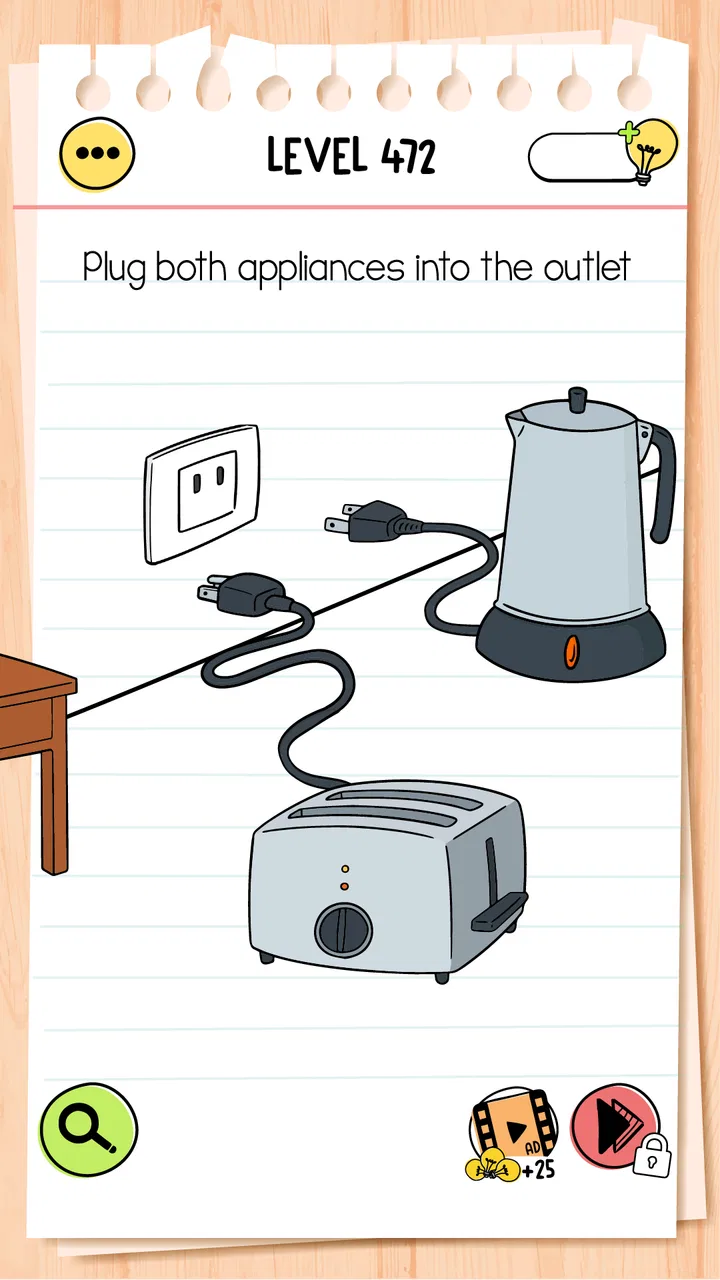
The strongest puzzles create a small conflict between what the text suggests and what the screen actually allows. I might begin by searching for a direct answer, then realize that the useful clue is visual rather than verbal. In other moments, the wording encourages a literal response while the intended solution depends on treating the instruction as a playful trick. That structure keeps the experience accessible without making it completely predictable.
The most useful habit is to question the instruction before questioning your intelligence. When I became stuck, repeatedly tapping the same obvious area was rarely productive. A better routine was to reread the prompt, look at every visible element, and consider whether the screen itself could be manipulated in an unexpected way. That small change in mindset made the game feel less like guessing and more like solving.
Why the “friends” presentation helps
The “Tricky Friends” identity gives the game a lighter personality than a bare collection of brain teasers. The puzzles feel designed for amusement rather than academic pressure. Even when I made a wrong move, the experience generally encouraged another attempt instead of making the mistake feel important. That makes it suitable for a quick break, a shared laugh, or a casual challenge between people who enjoy comparing their first guesses.
I also found that the presentation makes the game easier to pass around. A complicated strategy title often needs a long explanation before another person can try it. This one can be shown to a friend almost immediately: read the prompt, inspect the scene, and attempt a solution. The fun comes from watching someone commit to the obvious answer and then rethink it, so it works particularly well as a small social distraction.
That does not mean every puzzle will feel equally clever. Trick-based games depend heavily on surprise, and once I understood the developer’s style, some solutions became easier to anticipate. The early discovery is often the most enjoyable part. Later, I sometimes approached a new screen by asking, “What is the trick this time?” rather than engaging naturally with the situation. That is a normal weakness of this format, but it can reduce the sense of discovery during longer sessions.
How I would use it in everyday life
I think the ideal scenario is a short waiting period: a commute, a queue, a few minutes before an appointment, or a pause between chores. The game is easy to pick up without preparing a strategy or remembering a complicated story. I could play a handful of puzzles, put it down, and return later without feeling that I had lost the thread of a campaign.
It also works as a low-pressure family activity, provided everyone understands that the goal is not to prove who has the highest IQ. I would hand the device to someone who enjoys riddles and let them explain their reasoning out loud. The best conversations often happen after a failed attempt, because the group starts examining the wording and screen together. Younger players can participate too, although adults may need to help with a particularly indirect clue.
For personal use, I recommend keeping a limit on attempts rather than treating the game as a marathon. When I played for too long, the tricks began to blend together and I became more likely to tap randomly. A short session preserves the surprise and makes each successful solution feel earned. If a puzzle is frustrating, taking a break is more useful than forcing it; returning with fresh attention often reveals the detail I ignored.
Where it falls short
The same design choice that makes the game distinctive can also make it irritating. A puzzle may feel clever after I understand the intended interpretation, but before that point the solution can seem arbitrary. There is a fine line between encouraging creative thinking and asking the player to guess the designer’s private joke. When the clue is too subtle, success can feel less like deduction and more like finally finding the one action the game happened to expect.
This is the biggest limitation for players who want consistent logic. If you prefer puzzles where every step can be justified from clearly stated rules, the experience may occasionally test your patience. A traditional Sudoku app, a structured word game, or a serious logic collection would be a better match for that preference. Those alternatives usually offer a more stable difficulty curve and a stronger sense that the answer follows from a defined system.
There is also a difference between being free to install and being completely free from interruptions or spending prompts. The game is listed as free, with optional in-app purchases ranging from $0.99 to $24.99 per item. I would approach those purchases carefully. In a game built around solving surprises, hints can be useful when a puzzle becomes opaque, but using them too quickly can remove the most satisfying part of the experience. My advice is to attempt a puzzle seriously first and treat assistance as a last resort rather than part of the normal rhythm.
That purchase structure also affects who should skip the game. If you want a fully uninterrupted puzzle experience with no temptation to pay for help, a paid one-time alternative may suit you better. On the other hand, if you are comfortable trying the free version and deciding later whether optional assistance is worthwhile, the arrangement is easier to live with. I would not buy anything simply because I was impatient with one difficult screen.
What the technical details mean in practice
The game is available for devices running Android 6.0 or later, which makes it approachable for people using older compatible phones or tablets. The current version is 1.27.0, and the title has reached over 10 million installs. Its average rating is 4.7 from around 188 thousand ratings, with roughly 2.5 thousand written reviews. Those figures suggest that the format has connected with a large audience, although popularity should not be confused with universal appeal.
The age rating is Everyone, and that matches my understanding of the tone. The game is presented as accessible, playful entertainment rather than something built around mature themes. I would still judge it by the individual player’s tolerance for trick questions: a child who enjoys riddles may love the surprises, while someone who wants direct instructions could find the same design confusing.
It was released on February 9, 2023, and its ongoing version number indicates that the edition available today is not the original launch build. I would still keep expectations realistic about what an update means here. Version changes can improve compatibility or refine the experience, but they do not change the central identity of the game. This remains a collection of deceptive brain teasers, not a conventional trivia database that suddenly becomes more educational with each revision.
Three strategies that improve the experience
First, I recommend separating “knowledge problems” from “interaction problems.” If the prompt appears to ask for a fact, check whether the surrounding scene contains a more important clue. If the answer seems impossibly specific, stop searching your memory and inspect the objects, characters, and wording instead. This prevents a lot of wasted effort and is more reliable than trying random taps.
Second, use a deliberate reset when the screen feels crowded. I mentally name every visible element, including items that look decorative, then ask what would happen if each one were moved, pressed, or ignored. This is more effective than scanning vaguely across the display. The game’s tricks often depend on attention being pulled toward the most obvious object, so deliberately examining the background can reveal the intended route.
Third, do not assume that the first successful pattern will apply to the next puzzle. Once I learned that a screen might hide an interaction, I started seeing hidden interactions everywhere, including places where the answer was actually straightforward. Treating every level as a new problem keeps the game from becoming a mechanical hunt for the same gimmick. That balance—skepticism without paranoia—is where the best enjoyment lies.
A fourth tip is especially helpful when playing with another person: explain your reasoning before touching the screen. Saying the proposed solution out loud exposes assumptions that are easy to miss internally. It also turns a solitary puzzle into a small discussion, even when the answer is wrong. I found this more entertaining than simply handing over the device after getting stuck.
Who should choose it over another trivia game?
I would recommend this game to people who want a casual mental workout without studying facts. It suits players who enjoy riddles, lateral thinking, visual clues, and humorous misdirection. It is also a good choice for someone who needs a compact distraction that can be started and stopped easily. The free entry point makes it reasonable to try before deciding whether the style matches your taste.
I would be more cautious about recommending it to competitive quiz players. If your pleasure comes from knowing obscure information, comparing scores, or building expertise in a subject, this will probably feel too loose. It does not offer the same satisfaction as answering a difficult history question from memory. Likewise, players who dislike ambiguity may interpret the trick solutions as unfair rather than funny.
Compared with word puzzles, its advantage is visual variety and the possibility of interacting with the scene rather than only arranging letters. Compared with standard brain-training apps, it feels less like a measured exercise and more like a sequence of jokes that happen to require concentration. Compared with escape-room-style games, it is lighter and less dependent on a connected atmosphere. I would choose it when I want quick surprises, not when I want a long-form mystery or a carefully balanced logic system.
My final recommendation
Brain Test 4: Tricky Friends succeeds because it understands the pleasure of being fooled in a harmless way. Its best moments come when I realize that I was following the wording too obediently or ignoring an obvious visual detail. The game is approachable, suitable for Everyone, and supported by a large player base, but its popularity does not remove the central trade-off: clever misdirection can sometimes feel arbitrary.
I would install it if I wanted a free trivia-style game for short breaks, casual family play, or friendly debates over puzzle solutions. I would keep the optional purchases in mind, resist using hints too early, and play in small sessions to preserve the surprise. If you want rigorous logic, factual quizzes, or a completely frictionless paid experience, another category will serve you better.
For everyone else, my verdict is positive with a clear qualification: this is a playful test of attention and flexibility, not a formal measure of intelligence. Approach it as a mischievous puzzle collection, read every prompt twice, and accept that a few answers may make you laugh only after they make you sigh. On those terms, it is an enjoyable and unusually easy game to recommend to a friend.
FAQs for Brain Test 4: Tricky Friends
01What is Brain Test 4: Tricky Friends?
Brain Test 4: Tricky Friends is a puzzle game that challenges players with a variety of brain-teasing scenarios. The game offers tricky questions and riddles designed to test your logic, intuition, and problem-solving skills. It's the latest installment in the popular Brain Test series and is available for both Android and iOS devices.
02Are there in-app purchases in Brain Test 4?
Yes, Brain Test 4: Tricky Friends includes in-app purchases. While the game is free to download, players can buy hints and solutions to help them progress through more challenging levels. These purchases can enhance the gaming experience, especially if you find yourself stuck on a particularly difficult puzzle.
03Is Brain Test 4 suitable for all ages?
Brain Test 4: Tricky Friends is designed to be family-friendly and suitable for players of all ages. The puzzles range in complexity, making it accessible for younger players while still challenging enough for adults. However, parental guidance may be needed for very young children as some puzzles require more advanced problem-solving skills.
04Can I play Brain Test 4 offline?
Yes, Brain Test 4: Tricky Friends can be played offline, allowing you to enjoy the game without an internet connection. This makes it a great option for playing on the go or in places where connectivity is limited. However, certain features, such as in-app purchases, require an internet connection.
05How does Brain Test 4 compare to previous versions?
Brain Test 4: Tricky Friends builds on the success of its predecessors by introducing new characters, puzzles, and themes. The game maintains the same engaging style and humor but offers fresh challenges and improved graphics. Fans of the series will appreciate the continuity, while newcomers will enjoy the innovative gameplay.
Pros
- Engaging puzzles keep users entertained.
- Regular updates introduce new challenges.
- Colorful graphics enhance user experience.
- Suitable for all ages
- promoting family play.
- No internet needed for offline play.
Cons
- Ads can be intrusive during gameplay.
- Some puzzles may feel repetitive.
- In-app purchases can add up quickly.
- Hints may not always be very helpful.
- Limited customization options available.

Brain Test 4: Tricky Friends
Gallery